Charlotte Mason-Inspired Kindergarten Curriculum (+ free booklist!)
Are you thinking about homeschooling your child for kindergarten? In this post, I share how we did ours and offer tips and resources for planning your own Charlotte Mason kindergarten year!
I have several posts on my website about homeschooling younger children. One of these talks about the benefits of starting your kindergarten year later rather than earlier, and also how using simple, gentle lessons for your five- to six-year-old child is a wonderful way to ease them into more formal schooling. This is part of the “why” behind our choice to homeschool kindergarten in the beginning. And while I am (obviously) very in favor of homeschooling and know full well the benefits of choosing this path, I also understand that this decision can also be hard to make.
So if you’re seriously considering the homeschooling route but still wondering whether you can teach your child, the first thing I want to say is this…
You can do this.
In reality, you have been leading your child’s education since the day they were born. Maybe not in the traditional sense of reading, writing, and arithmetic, but in the larger sense of how to be. How to observe the world around them. How to treat others. How to form good habits. What things to take delight in. What things to avoid that might harm them.
You, of all people on this planet, know your child best, and that means understanding their strengths and weaknesses. Knowing what fascinates them and holds their attention. You know how they respond to how other people treat them. And you know best when they show signs of feeling overwhelmed and need to take things slowly.
Homeschooling Kindergarten
Kindergarten, in particular, is a perfect year for homeschooling for the first time. You can use this time, when your child is still very young, to see how you both can thrive by educating at home.
Because the kindergarten year doesn’t have to be complicated and really shouldn’t include the academic rigor that the upper grades will offer, you have the flexibility of going at their (and your!) own pace. This means you can take your time without feeling pressured to meet the sometimes unreasonable standards set by our public education system. You can educate your children in the way that best meets their needs, rather than conforming to a system that sets guidelines across the board and often fails to take each child’s unique abilities and personality into account.
With all that said, I understand, especially for those new to homeschooling, that facing that first year can be intimidating. Trying to sift through the many booklists, curricula, online programs, and advice out there can leave you feeling overwhelmed. In reality, as I said above, the kindergarten year does not have to be complicated, and really shouldn’t be. That’s why I began offering the Charlotte Mason-Inspired Kindergarten Curriculum nine years ago. It keeps the kindergarten year simple while also serving as a gentle introduction to the world of academics. In this post, I’m sharing the book list with anyone interested in crafting their own Charlotte Mason kindergarten year!
Charlotte Mason-Inspired Kindergarten
I want to emphasize, before diving into the book list, that Charlotte Mason did not recommend any formal education for children before the age of six.
How much time daily in the open air should the children have? And how is it possible to secure this for them? In this time of extraordinary pressure, educational and social, perhaps a mothers first duty to her children is to secure for them a quiet growing time, a full six years of passive receptive life, the waking part of it spent for the most part out in the fresh air. And this, not for the gain in bodily health alone––body and soul, heart and mind, are nourished with food convenient for them when the children are let alone, let to live without friction and without stimulus amongst happy influences which incline them to be good.
Charlotte Mason (Home Education, p. 43)
I wholeheartedly believe that “education” is being forced on children at far too young an age in modern times, especially as young children should be spending large parts of their days outside. However, for the child approaching their sixth birthday who is showing interest in “school,” I do not necessarily think that these “full six years of passive receptive life” and a simple, gentle kindergarten have to be mutually exclusive. Ms. Mason agreed with this when, in a 1912 Parents’ Review article, she wrote:
…let us be content to be the handmaids of Nature for the first five or six years, remembering that enormous as are the tasks she sets the children, she guides them into the performance of each so that it is done with unfailing delight; for gaiety, delight, mirth, belong to her method. If a child chooses to read and write before he is six, let him, but do not make him; and when he does begin, there is no occasion to hurry; let him have a couple of years for the task.
Charlotte Mason (“Three Educational Idylls,” The Parents’ Review, volume 23, November, 1912 – emphasis mine)
In Home Education, Ms. Mason wrote specifically about the Kindergarten Method (as German educator Friedrich Froebel had established it), suggesting that the home was an ideal place for a year of kindergarten and a mother the ideal teacher:
If the very essence of the Kindergarten method is personal influence, a sort of spiritual mesmerism, it follows that the mother is naturally the best Kindergartnerin [or kindergarten teacher]; for who so likely as she to have the needful tact, sympathy, common sense, culture?
Charlotte Mason (Home Education, p. 178)
Though every mother should be a Kindergartnerin, in the sense in which Froebel would employ the term, it does not follow that every nursery should be a regularly organised Kindergarten. Indeed, the machinery of the Kindergarten is no more than a device to ensure the carrying out of certain educational principles, and some of these it is the mother’s business to get at, and work out according to Froebel’s methods––or her own.
Charlotte Mason (Home Education, p. 179)
My original inspiration for creating this curriculum was that my oldest child’s birthday falls in August, and as we prepared for his sixth birthday, I didn’t think he was quite ready for first grade. However, I did feel that he was ready for something a little more structured than what we had been doing ﹣ though nothing too rigorous, as is the case with most kindergarten classes these days ﹣ which is why I began to determine how to work out my own “educational principles.” And that is how this curriculum was born.
That year, inspired by Charlotte Mason’s ideas, we spent our days being exposed to beautiful ideas by reading picture books together, playing simple math games (as well as counting and coloring together), feeding his natural curiosity by developing relationships with the natural world through observation, and making handicrafts together. We also continued to focus on habit training, which is also so important in those early years. All of this while still allowing plenty of outdoor playtime every day. Nothing was rigorous or demanding for either of us, and we were able to ease ourselves gently not only into the world of “school” for him but also into the world of homeschooling for both of us.
If you’re new to Charlotte Mason in general and want to learn more about her, a good starting point is Susan Schaeffer Macaulay’s For the Children’s Sake, which offers a great overview. However, nothing can replace Ms. Mason’s own words, and the generous women behind AmblesideOnline (AO) have made all of her original six-volume series available for free online (or you can buy print copies) as well as modern paraphrase versions. If you find it easier to read along with others, the AO forums host several book groups that are reading through a volume at any given time. Charlotte Mason Poetry also periodically offers the Idyll Challenge, which involves groups reading the books together over two years. I did this from 2020 to 2022 and enjoyed it very much!
And now, on to the books!
A Charlotte Mason Kindergarten Day
For us, an average day during my son’s first-grade year (during which we used AO Year 1) took about 2 hours. In contrast, the Charlotte Mason kindergarten curriculum, without a morning time, takes about 20 minutes per day if you’re doing 4 days per week, as we did (with a nature walk day on Friday). If you choose to do five days per week, it would take even less time each day. With the morning time that we also included, it was about 40 minutes in all. Some days were longer than others, but for the most part, we usually began at around 9:30 to 9:45 and were done by 10:15 or 10:30.
Subjects
In the list below, I’ve included links to free books where possible. I highly recommend using BookFinder to find any books you might want to purchase and Freegal for free music.
Also, I highly recommend pre-reading! This is something you will want to do throughout your homeschool journey, and the sooner you get into this habit, the better it will be for you later on. Different curriculum makers have different ideas about subjects and topics that are “okay” for their children to read or hear at specific ages. There have been times when I have assumed a book would be okay for our family simply because of who suggested it or the list on which I found it, but then discovered that it had content that I wasn’t comfortable with for my kids at that age. Going through the readings on your own before you read them to your kids to make sure the content aligns with your family’s values is highly recommended!
History
- Fifty Famous People (free on Kindle and Gutenberg – please note that this is not the same book scheduled for AO Year 1; though it is by the same author, the title of that one is Fifty Famous Stories Retold)
This is a book you’ll want to pre-read (see the note above)! While I don’t think the material is offensive, for sensitive kids, be aware that there are mentions of battles and weapons.
In case you’d like an alternative to Fifty Famous People, a reader mentioned Beautiful Feet Books as a good source as well, and I was particularly interested in their Child’s First Book of American History.
Geography
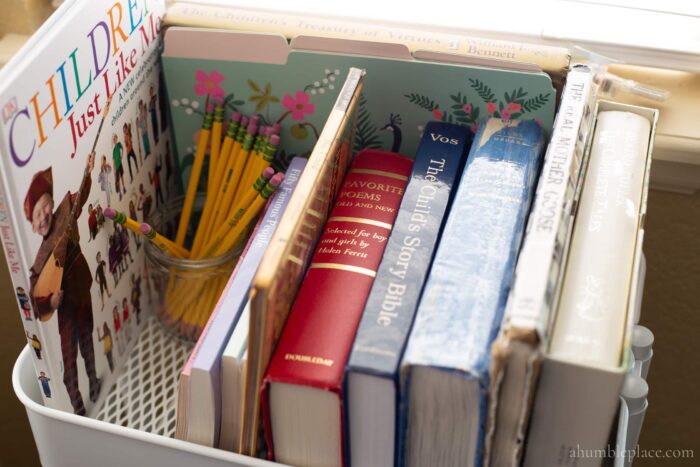
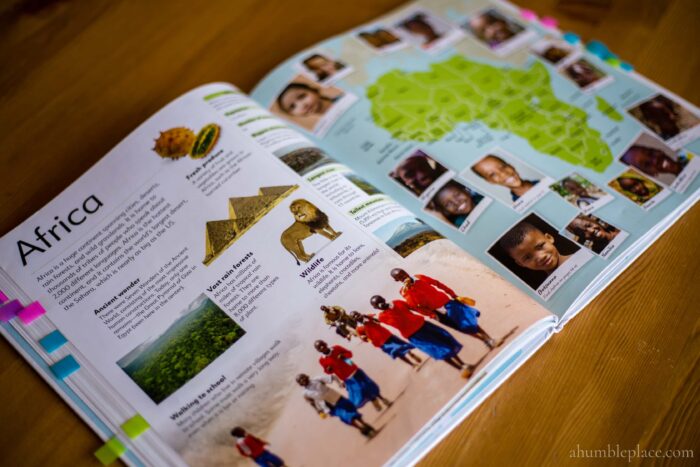
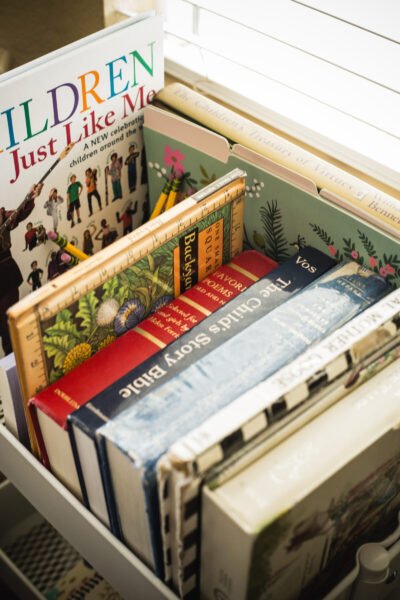
- Children Just Like Me: A new celebration of children around the world (DK Books)*
- The Irish Twins by Lucy Fitch Perkins (free on Kindle and Gutenberg)
- maps (optional)
- globe (optional)
*Please note that Children Just Like Me does include sensitive or potentially controversial topics, including many different religions and non-traditional families. I attempted to avoid these topics in the assigned readings in the curriculum, but I do recommend pre-reading this book before you allow your children to look at it on their own. There is also an older version of this book, published in 1995, which is another option as well. I opted for the newer version, as the older one is fairly outdated in many ways.
Children Just Like Me introduces you and your kids to children from around the world and provides a little information about their lives, including their families, cultures, favorite foods, religions, and school activities.
I chose The Irish Twins because my family is Irish, so I wanted to expose our kids to some of our heritage. However, Lucy Fitch Perkins wrote quite a few of these books covering other countries and nationalities as well (free on Kindle and also a few on gutenberg.org – check to make sure they’re age-appropriate on the Yesterday’s Classics website – ages are listed after the book description for each of these), so you can easily switch out however you see fit. I also recommend pre-reading this and the other “Twins” books as well.
Nature Study
- Old Mother West Wind (free on Kindle and Gutenberg)
- Seed Babies by Margaret Warner Morley (free on Google Books)
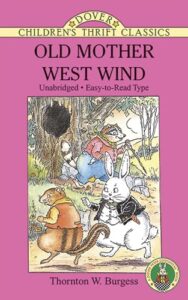
Old Mother West Wind was one of my kids’ favorite books from their kindergarten year!
I suggest Old Mother West Wind because it provides a good introduction to some of the characters you and your child will read about later if you choose to do AO. However, if you go with another curriculum, I still think all of Burgess’s books are fantastic, so I highly recommend them.
Seed Babies is just a fun book all around. My only suggestion to go along with this is to grow your own beans at home as you work through the chapters so your student can see what’s discussed in the book firsthand!
As I mentioned above, if you’re doing school four days per week, Friday can be a day for a nature hike. This is actually the most important part of nature study in a Charlotte Mason education (especially at this age), but it’s also very simple to do, and benefits both your kids AND you!
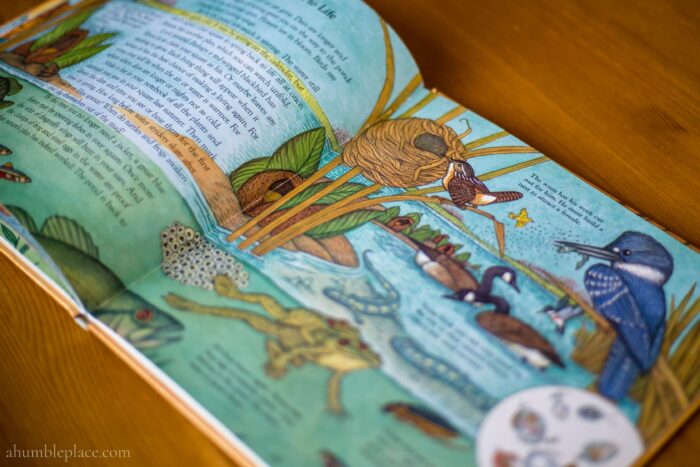
Science
- One Small Square Backyard by Donald Silver and Patricia Wynne
- Science in Seconds by Jean Potter
- One Small Square Pond by Donald Silver and Patricia Wynne
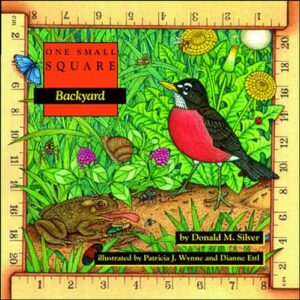
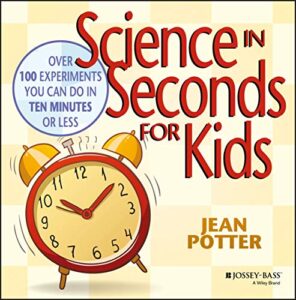
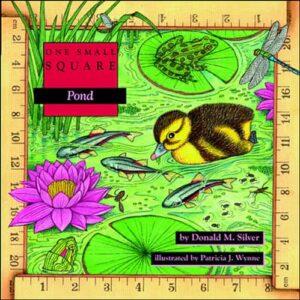
The One Small Square books are convenient because you can use them either in the “real world,” meaning you can actually do the one small square in your backyard or a nearby pond, or you can just follow along in the book if you don’t have a yard or access to a pond.
For Science in Seconds, I recommend reading each unit at the beginning of the week so you can pick an activity and know what you’ll need for science time in advance (I’ve also included overall supply lists and weekly supply lists in the curriculum).
Literature
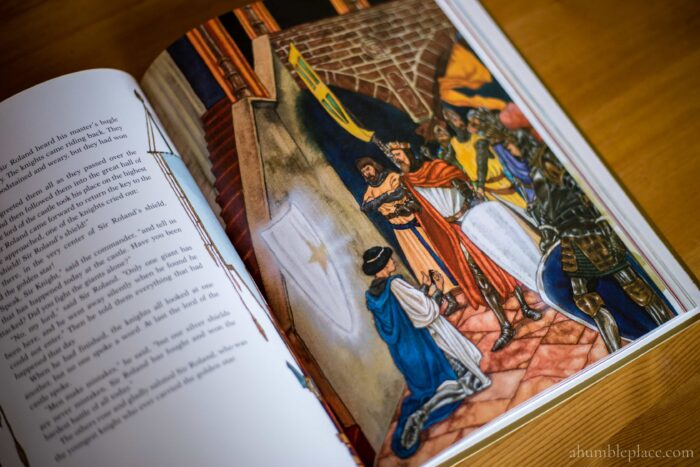
- Winnie-the-Pooh by A.A. Milne
- The House at Pooh Corner by A.A. Milne
- Beatrix Potter – The Complete Tales
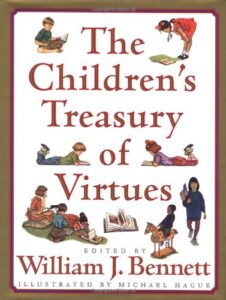
- The Children’s Treasury of Virtues by William J. Bennett
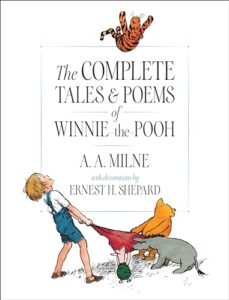
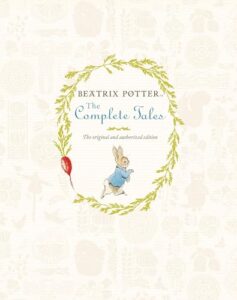
The copy of Winnie-the-Pooh I’ve linked to contains the stories and poems, and it’s the one my family has had since my kids were tiny!
The Beatrix Potter Complete Tales linked above includes all of the readings scheduled in the curriculum and is a beautiful addition to your book collection. The Children’s Treasury of Virtues is no longer in print, but I was able to find it at a reasonable price and in very good condition through bookfinder.com. You could also buy each of the three books it contains separately: The Children’s Book of Virtues, The Children’s Book of Heroes, and The Children’s Book of America (all by William J. Bennett).
Poetry
- Favorite Poems Old and New: Selected for Boys and Girls by Helen Ferris
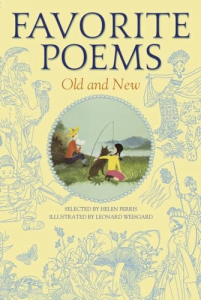
Even into later childhood, my daughter has loved reading through this book on her own.
This is an excellent collection of poetry from many different poets on several different subjects to add to your home library! I recommend reading a poem every day.
Math
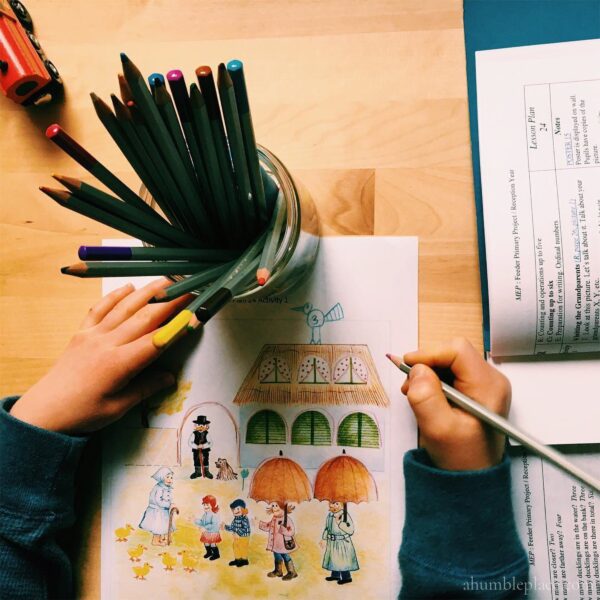
- MEP Reception (free)
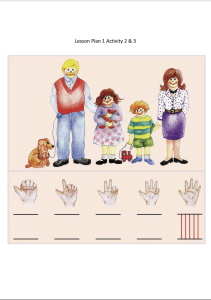
I have also written a guide here for MEP Reception that helps walk you through some of the more confusing activities!
I highly recommend MEP Reception if you want or need to do some math activities, but don’t want to spend a lot of money (or anything beyond printing costs). My kids really enjoyed the games and the crafts, too. The activities are engaging and mostly short, with no structured math.
I’ve also included a supply list of the things we used in the Supply Lists section of the curriculum book. For the most part, these are probably things that you have around the house.
If you want to start using a math curriculum that will carry you through 8th grade and are willing to invest in it early on, we have been using RightStart Math since Year 1, and I can’t recommend it enough! I will also add that I felt that the MEP Reception year more than prepared us for RightStart Level B in first grade.
Reading
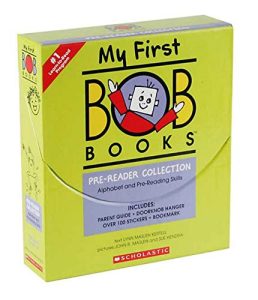
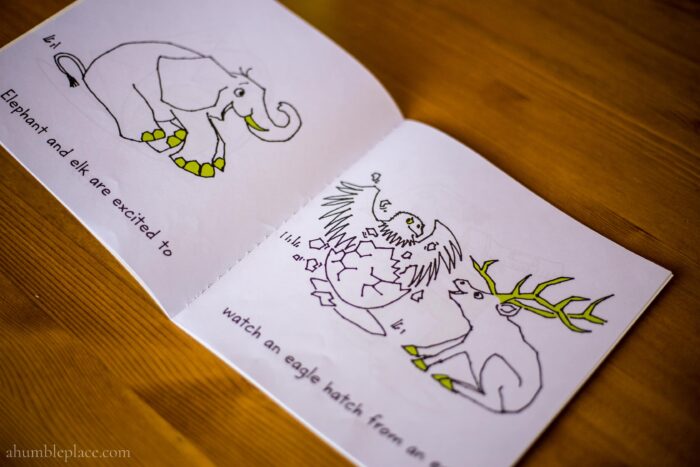
The Bob Books Pre-Readers are not strict reading instruction; instead, they review alphabet sounds, patterns, and sequencing as you read the short stories and do the activities at the end of the books with your student.
My son wasn’t quite ready to learn to read when we started our kindergarten year, and I didn’t want to pressure him to do so, so we took it very slowly. If your child is showing interest in learning to read and has these basic skills down, I used Teach Your Child to Read in 100 Easy Lessons during Year 1 with both of my kids with success. However, there is evidence that starting reading later is not necessarily a bad thing, so don’t feel pressured to begin early.
Handicrafts
- The Artful Year by Jean Van’t Hul
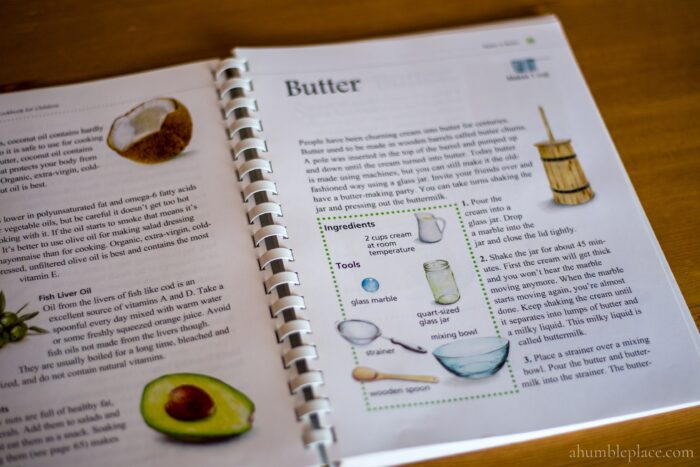
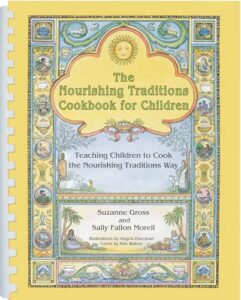
- (optional in the curriculum) The Nourishing Traditions Cookbook for Children by Suzanne Gross and Sally Fallon Morell
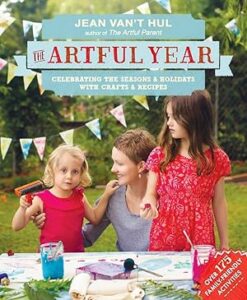
The Artful Year offers simple yet beautiful crafts related to the seasons of the year, often incorporating natural items into the craft.
I also believe cooking is a handicraft, and I highly recommend The Nourishing Traditions Cookbook for Children for getting your kids involved in the kitchen at an early age (I do have a printable schedule for this book in a homeschool setting here, but I recommend it for older children)!
Morning Time
Here are a few resources we’ve used:
- The Child’s Story Bible by Catherine Vos
- The Jesus Storybook Bible by Sally Lloyd-Jones
- Children of God Storybook Bible by Archbishop Desmond Tutu
- The Real Mother Goose Nursery Rhymes
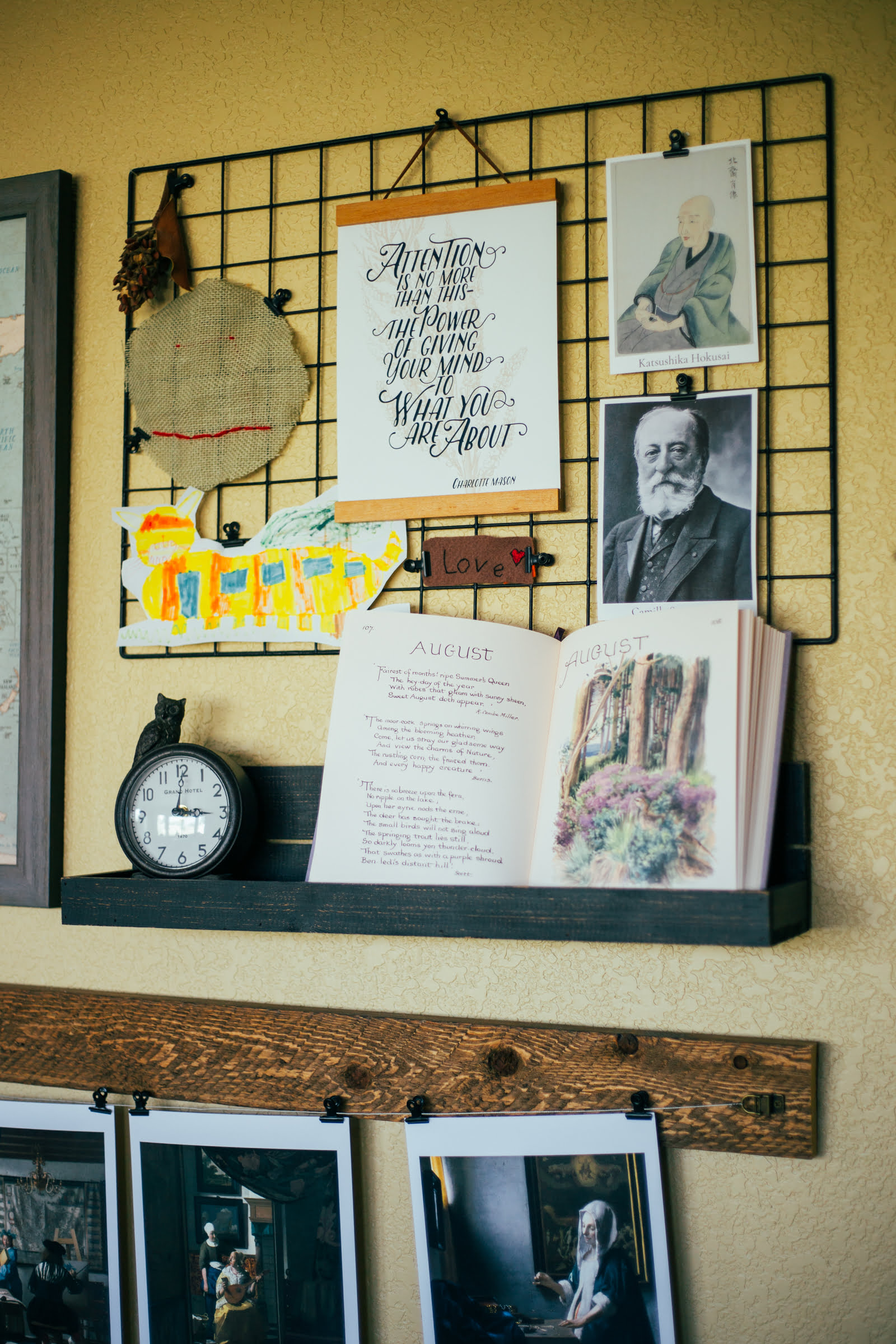
- Picture Study Resources (including a free Picture Study Aids for the AO Artist Schedule)
- AmblesideOnline Artist Study Schedule
- AmblesideOnline Composer Study Schedule (Freegal is a great source for free music downloads!)
- AmblesideOnline Hymn Schedule
- AmblesideOnline Folk Songs Schedule
I also have a post with an overview of kindergarten morning time here!
I hope this list of book ideas for your homeschool kindergarten year has been helpful! You can receive a free printable booklist with all of these books by entering your information in the form at the end of the post!
If you would like the Charlotte Mason kindergarten curriculum scheduled out for you term-by-term and week-by-week for an entire school year, keep reading!
Charlotte Mason-Inspired Kindergarten Curriculum
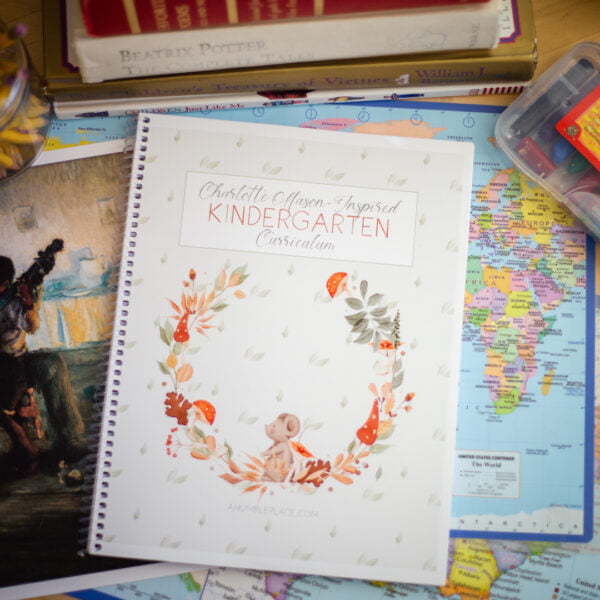
Now that you have the book list, what’s next? If you’re not sure how to spread all of this out over 36 weeks, I also offer a Charlotte Mason-Inspired Kindergarten Curriculum in PDF and printed form!
With this complete curriculum guide, you will also get…
Recent Reviews
You can pick up your own copy of the curriculum below!






Did you used to recommend “Seven Little Sisters Who Live on the Round Ball…” for a geography book for AO 0.5? I thought I had seen it mentioned on your page, which is why I got it for my daughter this year. IF you were the one who used it…. my question was going to be: 1) who is the “brown baby”, and what continent is she from? and 2) Did you ever find the book offensive or racist against those of darker skin colors? I tried to scan it a bit, and saw some dated language for those of darker tones, but also saw in the end it might all come together and show how we are all daughters of God? And– if you are NOT the one who used it for AO 0.5, ignore completely! I’m just trying to do a little background research before we dive into this book and I get taken by surprise by anything! 🙂 Blessings on the new school year!
I found that book mentioned on a few book lists, so I did include it during my son’s kindergarten year (and it’s mentioned in my recap posts for his year). Overall, the racial references were very problematic and so I did not include it in my kindergarten curriculum. It was definitely written from the point of view of a 19th-century white woman and she injected her opinion about different cultures and races (including texture of hair and common practices) throughout the book. While I think some of the stories were excellent (the ostrich in the story about Gemila was especially good), overall I just wasn’t comfortable recommending it anymore. I believe the brown baby was from South America, but I don’t remember that Ms. Andrews ever really confirmed that.
Ultimately, as I made my way through the book with my son, aspects of it made me very uncomfortable and I found that I had to explain several times that this was how people used to think but it wasn’t how we talk about anyone anymore. I was also influenced by the idea of reading these stories to my niece and nephew, who were born in Rwanda and Uganda, and I thought some of the language would be especially hurtful to them. I chose to switch to a more modern book that allowed children from all over the world to introduce themselves (“Children Just Like Me”).
Hello Rebecca
Thank you so much for sharing your inspiration for the K curriculum. Would you recommend each of Geography, History and Science scheduled for once a week? I’m presently using FIAR for Literature and it covers some of these areas but more as a supplemental so I am interested in how you would recommend scheduling these areas of study. Thank you.
Hi Maria! I do include those subjects on a weekly basis in the Kindergarten Curriculum mainly because Charlotte Mason advocated for a rich and varied education. However, the readings and activities are very short. 🙂
Hello! I’ve been reading through your posts as I look for options for the 21-22 kindergarten year for my son. Thank you for sharing all that you have done! It was so helpful hearing your perspective and experience. I am very drawn to your kindergarten curriculum. It seems like the perfect mix of the structure I crave for our days while still being gentle and easy in a Charlotte Mason inspired way. Are the details for the picture studies, composer studies, hymn and such that you referenced from Ambleside Online included in your schedule? Or would I need to curate that on my own? Also, is there a plan for a 21-22 update this spring or would I be good to purchase the curriculum now? Thank you!
Hi Sarah! In the past, I have not scheduled specific art or songs for picture/composer study, hymn, or folksong because I wanted to allow people the flexibility of adding their own. However, this year I am working on something different that will schedule those in and I’ll reference either free or affordable resources for the selections I choose. So, yes, there will be an update for 21-22. 🙂 However, I don’t anticipate that it will be greatly different than the 20-21 book, so I think either one will work well!
My daughter is turning six in November. We have older siblings who start school in August, and it would be easier for me to start all of the kids at the same time I know Charlotte Mason said you should wait until age six, but don’t know what to do with her until then. Is this a good curriculum to start as an older 5 or should I wait until her sixth birthday?
I did it with my daughter when she was 5.5 (her birthday is in January and we started in August) as she was expressing interest in joining her brother in school. 🙂
Does this curriculum have specific poems for each week or do you just recommend parents pick from the recommend poetry book?
I have a few recommendations for poetry books but I do not assign specific poems. I used to, but some families found some of them not to their taste, so I decided to recommend that families pick their own.
this is beautiful! I have run out of kindergarteners (my youngest is eleven now!) – but i almost wish i could be starting another little one with this :). Good work!
Is there an alternative for geography besides one of the books from the Twins series? I’d like to find something a bit more easily accessible.
I do have another geography book scheduled, but I don’t have any recommendations outside of the Twins books. You could certainly replace it with anything you’d like, though!